SCIENCE & BARRIER
UNDERSTAND YOUR BARRIER
The skin barrier locks in moisture and provides the first line of defense against external stressors. Every formula is designed to support it. Here, we explain how it works, what challenges it and the evidence behind our approach.
SKIN BARRIER
YOUR BARRIER IS HOW
YOUR SKIN PROTECTS ITSELF
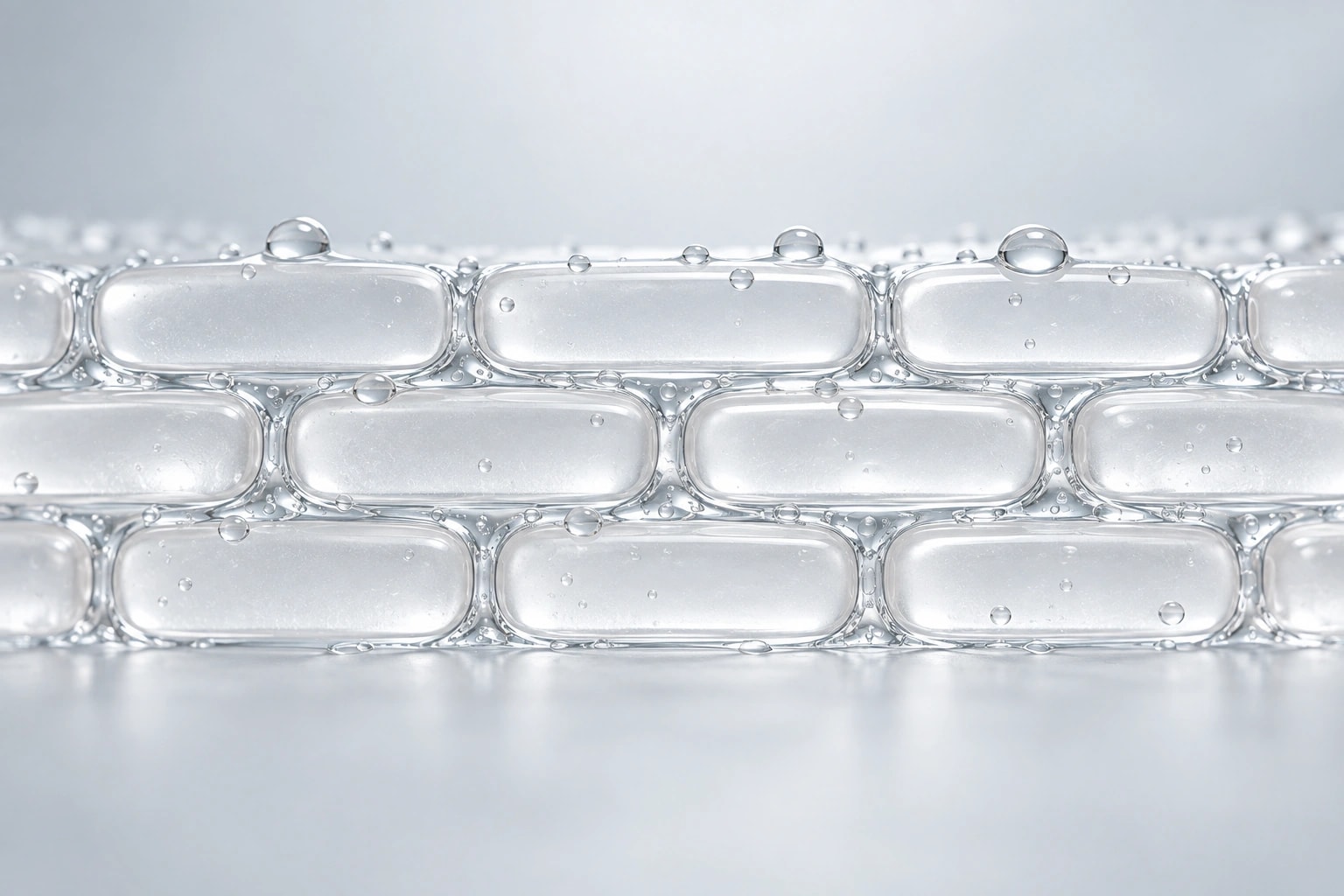
BRICKS
Corneocytes are the building blocks of the outermost layer of skin.
MORTAR
Ceramide, cholesterol and fatty acids hold the bricks together.
TEWL
Transepidermal water loss. A low TEWL is indicative of a strong barrier.
WHAT STRESSES YOUR BARRIER
The barrier is a self-renewing structure; But when the load exceeds the recovery rate, water loss increases and the skin feels tight and sensitive.
HARSH CLEANSING
Sulfate-based, heavily foaming cleansers and hot water can strip the skin’s surface lipids.
TOO MANY ACTIVES
Layering strong actives in the same routine can leave the barrier little time to recover.
SUN
UV rays increase the daily stress load of the skin and fatigue its support structures in the long term.
ENVIRONMENT
Dry indoor air, wind and cold accelerate water loss.
TIME
Over the years, the skin's own lipid and moisture production slows down.
OUR APPROACH
FIVE FUNCTIONS, ONE SYSTEM
Barrier support takes complementary actions, not a single active ingredient. Our six products share these roles throughout your routine.
- 01
REPLENISH
Ceramide NP and botanical oils help replenish a weakened lipid matrix.
Ceramide NP · botanical oil blend
- 02
STRENGTHEN
Niacinamide strengthens the barrier from the inside by supporting the skin's own ceramide synthesis.
Niacinamide
- 03
RETAIN MOISTURE
Humectants and NMF-like ingredients retain water in the upper layers of the skin.
Hyaluronic acid · Sodium PCA · amino acids
- 04
SOOTHE
Soothing ingredients support comfort and tolerance.
Centella · panthenol · allantoin · bisabolol
- 05
PROTECT
The photostable, broad-spectrum filter system completes the morning routine.
DHHB · BEMT · Ethylhexyl Triazone
FORMULATED FOR RESULTS
THE SAME FOUNDATION IN EVERY PRODUCT
- 01
NIACINAMIDE
Supports ceramide synthesis and a more even-looking skin tone.
- 02
CERAMIDE NP
Helps replenish the barrier’s lipid matrix.
- 03
PREBIOTIC FOS
It supports the balanced environment of the microbiome.
- 04
BOTANICAL OILS
It nourishes and softens with linoleic acid and GLA.
- 05
HYALURONIC ACID
Supports hydrated, plump-looking skin.
OUR LANGUAGE OF EVIDENCE
WHAT IS BEHIND OUR WORDS?
We use words such as ‘supports’ and ‘helps’ because cosmetics do not treat skin conditions; they work alongside the skin’s own functions.
We publish numerical results, including SPF ratings, only when supported by testing on the finished product. We also make the evidence level for each ingredient clear.
- WELL ESTABLISHED
- An ingredient whose effects have long been understood and are widely accepted in the scientific literature.
- WELL SUPPORTED
- A widely used ingredient supported by controlled studies.
- EMERGING RESEARCH
- Area under ongoing research; That's why we keep our claims cautious.
SELECTED SCIENTIFIC SOURCES
- 1.Coderch L, López O, de la Maza A, Parra JL. Ceramides and skin function. Am J Clin Dermatol. 2003;4(2):107–129.
- 2.Tanno O, et al. Nicotinamide increases biosynthesis of ceramides to improve the epidermal permeability barrier. Br J Dermatol. 2000;143(3):524–531.
- 3.Bissett DL, Oblong JE, Berge CA. Niacinamide: a B vitamin that improves aging facial skin appearance. Dermatol Surg. 2005;31(7 Pt 2):860–866.
- 4.Hakozaki T, et al. The effect of niacinamide on reducing cutaneous pigmentation and suppression of melanosome transfer. Br J Dermatol. 2002;147(1):20–31.
- 5.Papakonstantinou E, Roth M, Karakiulakis G. Hyaluronic acid: a key molecule in skin aging. Dermatoendocrinol. 2012;4(3):253–258.
- 6.Lin TK, Zhong L, Santiago JL. Anti-inflammatory and skin barrier repair effects of topical plant oils. Int J Mol Sci. 2018;19(1):70.
- 7.Bylka W, et al. Centella asiatica in dermatology: an overview. Phytother Res. 2014;28(8):1117–1124.
- 8.Proksch E, Nissen HP. Dexpanthenol enhances skin barrier repair and reduces inflammation after SLS-induced irritation. J Dermatolog Treat. 2002;13(4):173–178.
- 9.Proksch E, et al. Topical use of dexpanthenol: a 70th anniversary article. J Dermatolog Treat. 2017;28(8):766–773.
- 10.Dhaliwal S, et al. Prospective, randomized, double-blind assessment of topical bakuchiol and retinol for facial photoageing. Br J Dermatol. 2019;180(2):289–296.
- 11.Blanes-Mira C, et al. A synthetic hexapeptide (Argireline) with antiwrinkle activity. Int J Cosmet Sci. 2002;24(5):303–310.
STRENGTH FIRST. RADIANCE FOLLOWS.
Explore what each ingredient does and where to find it in our Ingredient Glossary.